If you’re planning an off-grid battery system, one of the most important design decisions is choosing between AC coupled vs DC coupled off-grid battery systems. Both approaches can deliver reliable energy storage, but they differ significantly in efficiency, flexibility, installation complexity and long-term expandability.
The right choice depends on your solar system, battery type, budget and future energy goals. Understanding how each system works can help you avoid unnecessary costs while building a system designed to perform reliably for years.
Whether you’re designing a new off-grid installation, upgrading an existing solar setup or comparing lithium battery options, this guide explains the differences in simple terms and helps you decide which configuration best suits your needs.
What Are DC Coupled Off-Grid Battery Systems?
A DC coupled off-grid battery system stores solar energy before it is converted into AC electricity. Solar panels generate direct current (DC), which flows through an MPPT charge controller to charge the battery. When electricity is needed, the inverter converts the stored DC power into AC for household appliances.
Typical power flow:
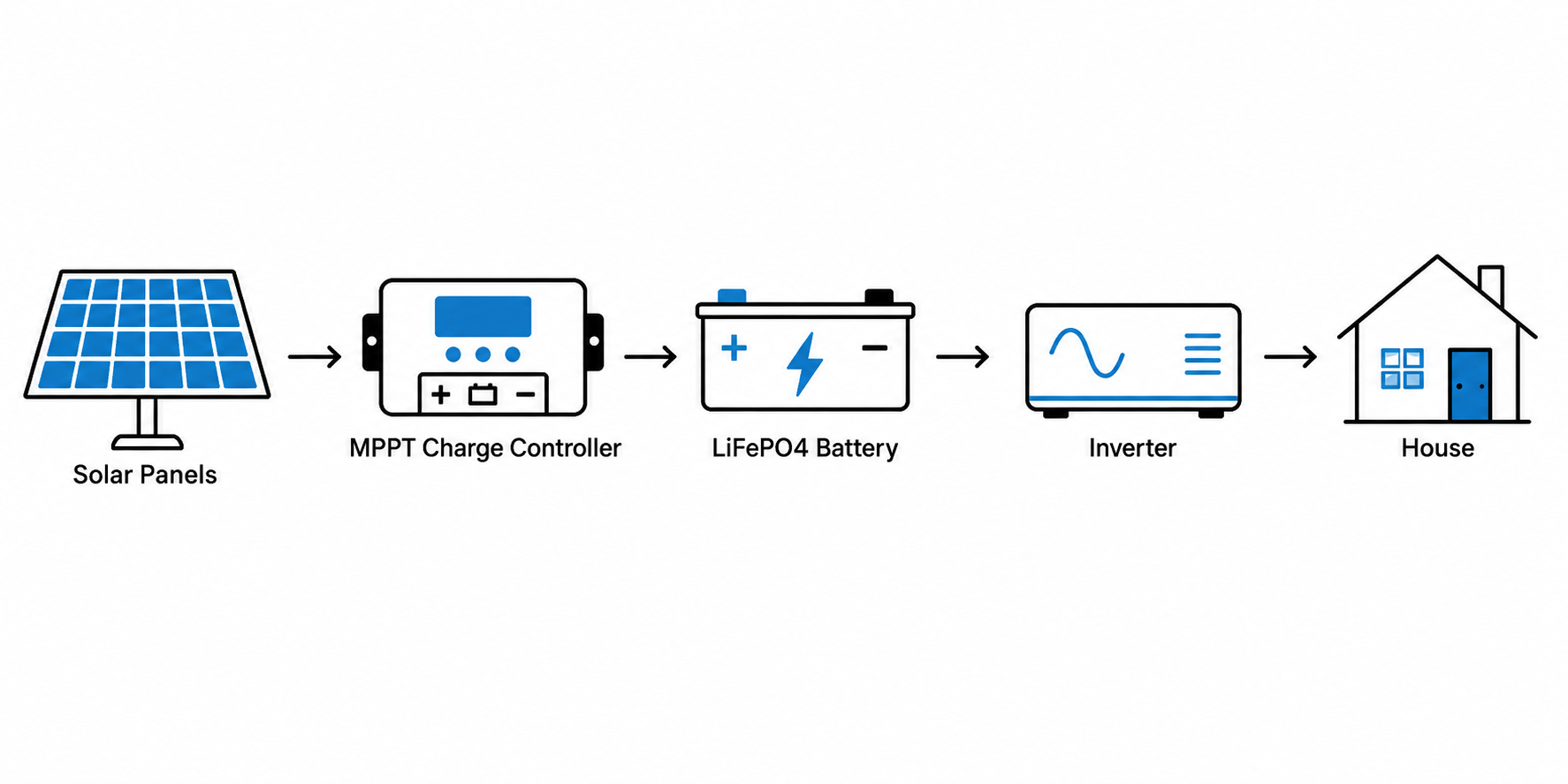
Because the battery connects directly to the DC side of the system, DC-coupled systems typically involve fewer major power conversion stages between solar generation and battery storage, which can help reduce overall conversion losses. Actual system efficiency also depends on factors such as MPPT charge controller performance, inverter efficiency, cable sizing and battery characteristics.
Related Reading: Learn how an MPPT solar charge controller improves solar energy harvesting and helps optimise charging for LiFePO4 batteries.
Advantages of DC Coupled Off-Grid Battery Systems
- Higher overall efficiency: Because solar energy is typically stored in the battery before being converted to AC power, DC coupled systems involve fewer major power conversions. This can help reduce overall conversion losses, although actual efficiency also depends on factors such as MPPT charge controller performance, inverter efficiency and overall system design.
- Simpler system design: DC coupled systems generally require fewer major components than AC coupled systems, which can simplify installation, reduce wiring complexity and make troubleshooting easier.
- Often more cost-effective for new installations: When designing a new off-grid system from scratch, DC coupling can reduce equipment requirements by integrating battery charging and energy management into a more streamlined system, potentially lowering overall installation costs.
- Well suited to dedicated off-grid applications: DC coupled systems are commonly used in remote homes, cabins, caravans, campervans, 4WDs and other standalone power systems where efficient battery charging and a simple system architecture are priorities.
Disadvantages of DC Coupled Off-Grid Battery Systems
- Expanding an existing solar system may require redesigning parts of the installation
- Component compatibility must be carefully planned
- Future upgrades can require replacing charge controllers or inverters
What Are AC Coupled Off-Grid Battery Systems?
In an AC coupled off-grid battery system, solar panels first generate DC electricity, which is converted into AC by a solar inverter. When excess energy is available, a battery inverter/charger converts that AC electricity back into DC to charge the battery. Later, stored battery energy is converted back into AC to power household appliances.
Typical power flow:
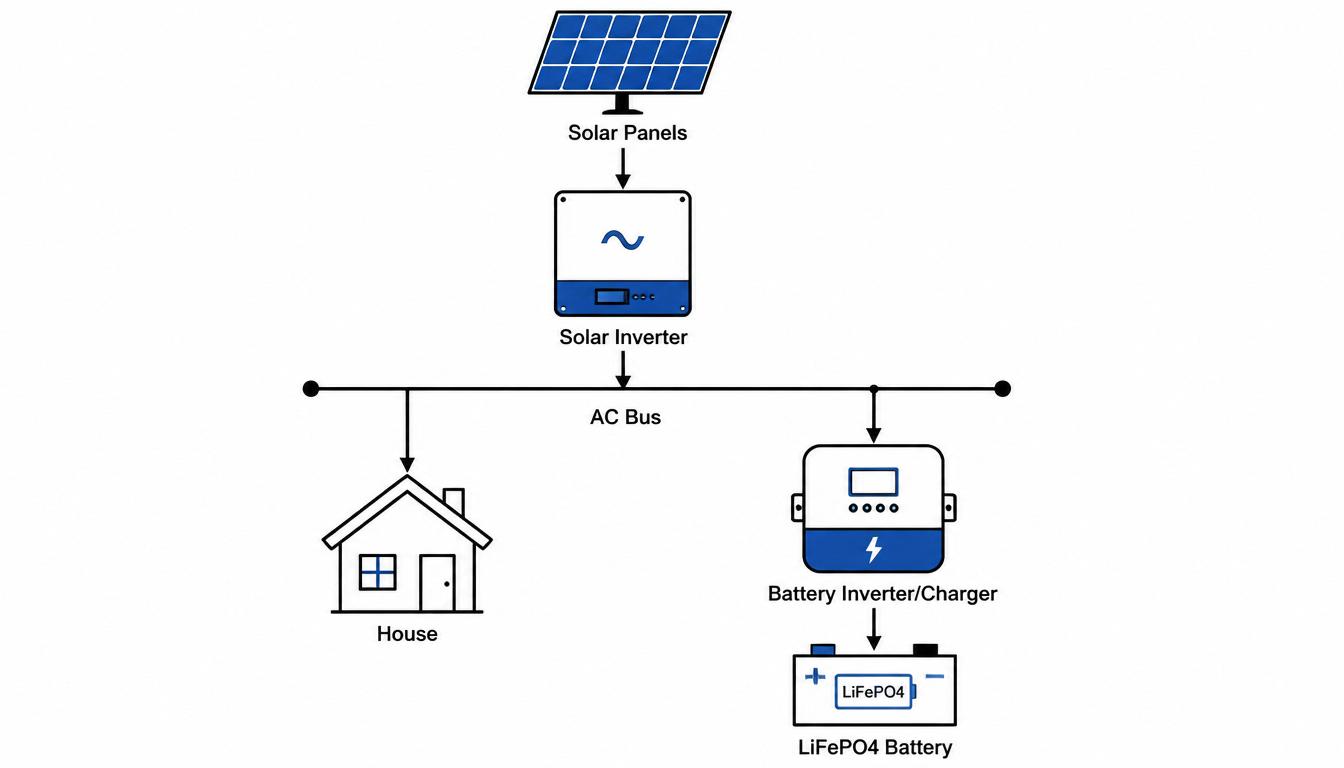
In this configuration, batteries connect through the AC side of the electrical system. While AC coupling is commonly used when adding battery storage to an existing solar installation, it can also be used in newly designed systems where its flexibility offers advantages.
Advantages of AC Coupled Off-Grid Battery Systems
- Ideal for upgrading existing solar systems: AC coupled systems allow battery storage to be added to many existing solar installations without replacing the original solar inverter. This can reduce upgrade costs and simplify the installation process.
- Greater flexibility for future expansion: Additional battery capacity or system components can often be integrated more easily, making AC coupling a practical option for homeowners planning to expand their energy storage over time.
- Works with existing AC solar infrastructure: Because the battery system connects through the AC side of the electrical system, AC coupling is compatible with many existing solar PV installations when paired with suitable equipment.
- Suitable for larger or more complex energy systems: AC coupled systems can be a good choice for larger residential and commercial installations where flexibility, scalability and integration with existing electrical infrastructure are important.
Disadvantages of AC Coupled Off-Grid Battery Systems
- Additional power conversions reduce overall efficiency
- Typically requires more equipment
- Higher installation costs in many cases
- More complex system design and maintenance
Differences Between AC and DC Coupled Battery Systems
| Feature | DC Coupled | AC Coupled |
| Connection point | DC side (before inverter) | AC side (after solar inverter) |
| Energy conversion | Fewer conversions | More conversions |
| Efficiency | Generally higher | Slightly lower |
| New installations | Preferred option | Suitable |
| Existing solar upgrades | More complex | Preferred option |
| System complexity | Lower | Higher |
| Expansion flexibility | Moderate | High |
| Typical use case | New off-grid systems | Existing solar system upgrades |
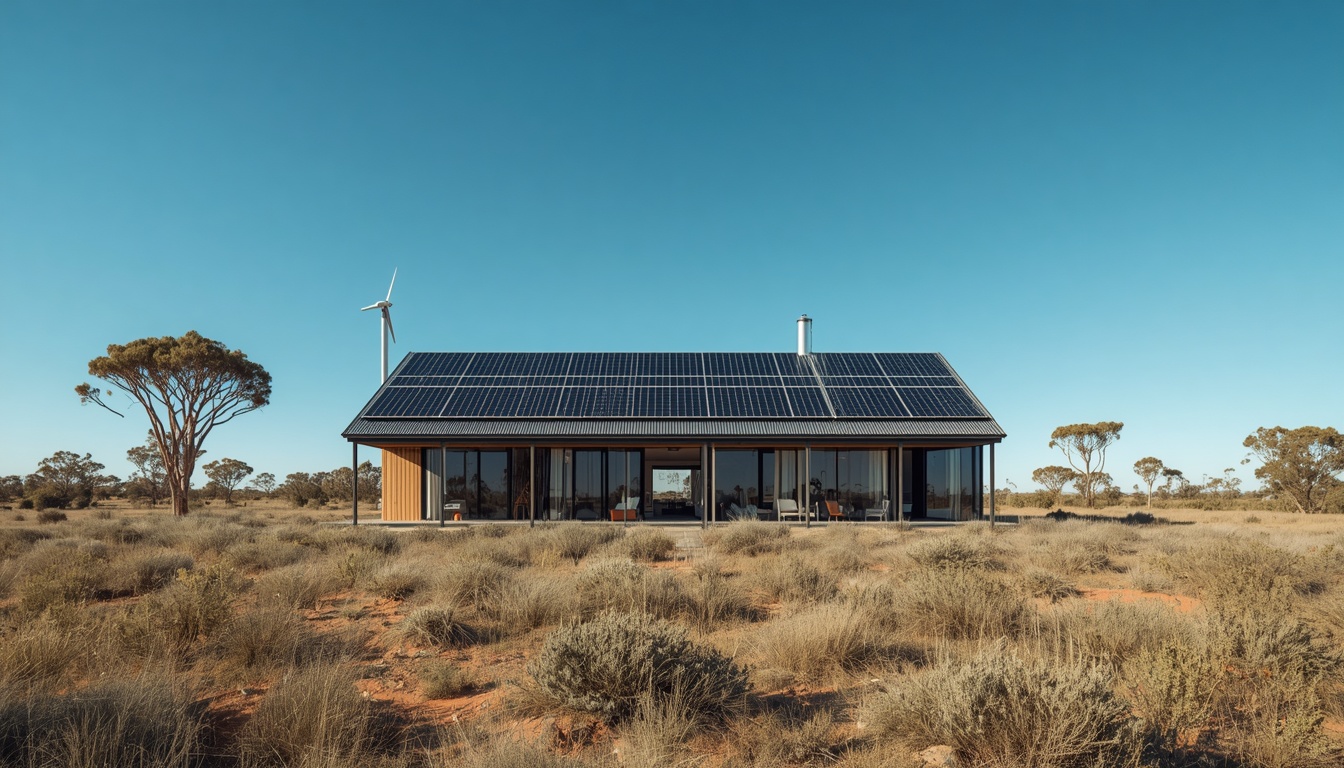
Selecting the Right Solar Battery Setup
Efficiency
- DC coupled systems are generally more efficient because they require fewer energy conversions, reducing power losses.
- AC coupled systems involve additional conversion stages but still deliver excellent performance when designed with compatible components.
System Upgrades
- AC coupling is often the easiest option for adding battery storage to an existing solar system.
- DC coupling is better suited to new off-grid installations, where the entire system is designed as one integrated setup.
Battery Compatibility
- LiFePO4 batteries work exceptionally well with both AC and DC coupled systems due to their high efficiency, fast charging, long lifespan, deep discharge capability and low maintenance.
- Overall system performance depends on selecting compatible batteries, inverters, charge controllers and solar panels that are correctly sized for your energy needs.
Related Reading: Building an efficient off-grid setup requires more than choosing the right coupling method. Learn how to design a reliable off-grid solar system with compatible batteries, inverters and solar components.
Common Mistakes When Choosing a Battery System
Avoid these common planning errors:
- Choosing based only on upfront cost.
- Ignoring inverter compatibility.
- Underestimating future energy requirements and planned system expansion.
- Buying batteries before designing the complete system.
- Overlooking cable sizing and voltage drop.
- Selecting incompatible battery management systems (BMS).
A properly designed system should balance battery capacity, solar generation, inverter size and charging equipment rather than focusing on any single component.
Related Reading: Choosing the correct battery configuration is essential for system performance. Learn the differences between connecting lithium batteries in series and parallel and how voltage affects your setup.
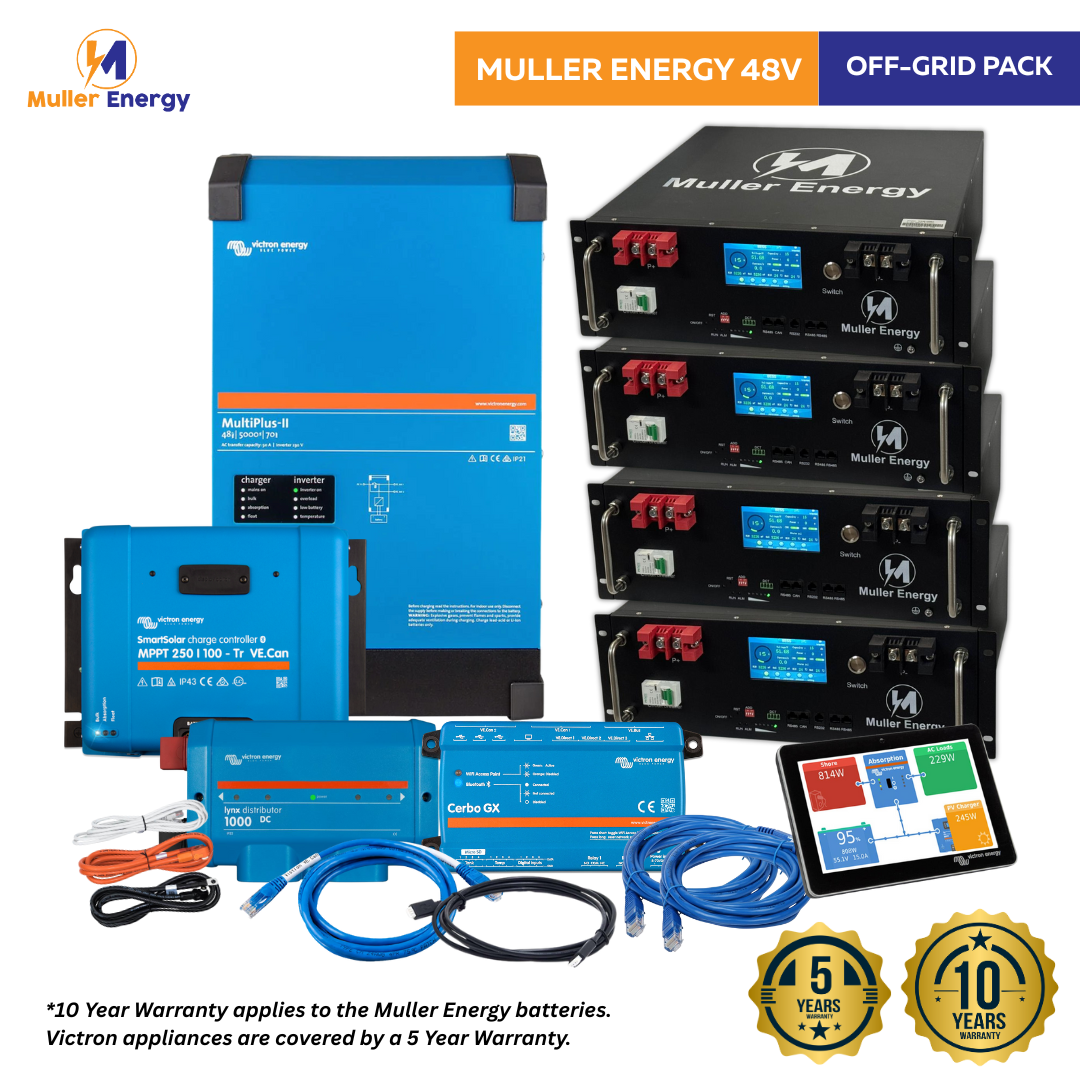
Plan the Entire Energy System, Not Just the Battery
Many off-grid problems don’t come from choosing AC or DC coupling; they result from mismatched components.
If you’re designing a new off-grid setup, it’s worth selecting batteries, chargers, inverters, solar panels and battery management equipment as a complete system rather than sourcing individual parts independently. This helps ensure compatibility, simplifies installation and makes future upgrades easier.
Muller Energy supplies LiFePO4 batteries, BMS units, inverters, chargers, solar panels, cables and other off-grid components designed for Australian conditions. Choosing compatible components from a single supplier can help simplify system planning, installation and ongoing support, particularly for caravans, campervans, 4WDs, marine applications and permanent off-grid systems.
Eligible batteries are backed by a 10-year warranty, with Australia-wide shipping and local technical support available to assist customers throughout the installation process.
How to Decide Between AC and DC Coupling
Before purchasing equipment, ask yourself:
- Is this a completely new off-grid installation?
- Am I upgrading an existing solar system?
- How important is maximum efficiency?
- Will I expand the system later?
- What inverter equipment do I already own?
- How much battery storage will I eventually require?
Answering these questions usually makes the best option much clearer.
Frequently Asked Questions
Why do many people still choose AC coupling?
Although DC coupling is generally more efficient, AC coupling remains popular because many homes already have a working solar PV system. Adding batteries without replacing the existing inverter can significantly reduce upgrade costs while allowing homeowners to retain their current equipment.
Can I add batteries to an existing solar system?
Yes. AC coupled battery systems are commonly used to retrofit battery storage onto existing solar installations without replacing the original solar inverter.
Which system is better for off-grid homes?
For most new off-grid homes, DC coupled systems are preferred because they maximise solar charging efficiency and reduce equipment complexity.
Do LiFePO4 batteries work with both AC and DC coupled systems?
Yes. LiFePO4 batteries are compatible with both system types when paired with suitable charge controllers, inverters and battery management systems.
Can I expand my battery bank later?
In many cases, yes. However, expansion should be planned during the initial system design to ensure compatibility between batteries, inverters and charging equipment.