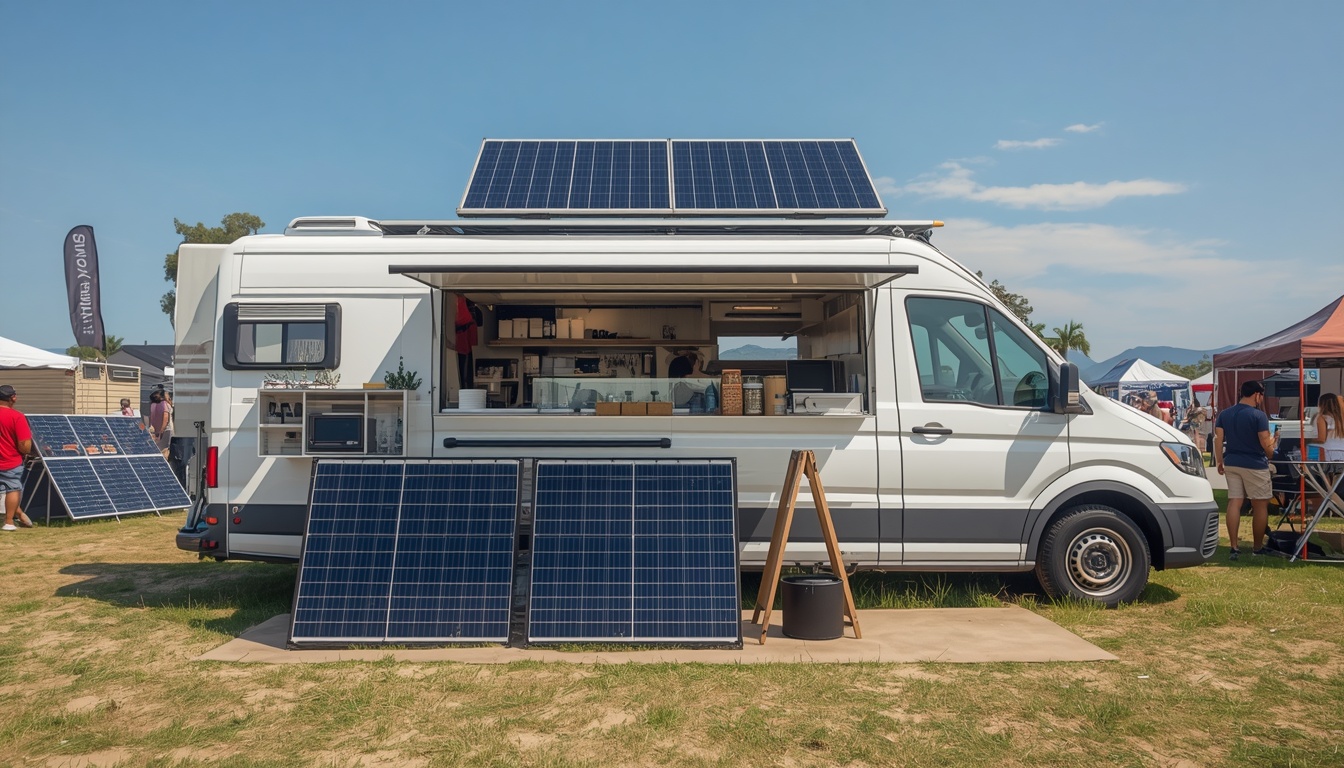
Yes, you can power a food truck with solar panels, but the answer depends on what equipment you’re running, how long you operate, and whether you’re using battery storage.
Solar panels alone are rarely enough to provide reliable power throughout an entire trading day because energy production changes with sunlight and appliance demand. Most food trucks use battery storage, a solar charge controller and an inverter to maintain consistent power.
During daylight hours, the panels generate electricity while also recharging the battery bank, which supplies power whenever demand exceeds solar production. For food truck owners looking to reduce generator use, lower fuel costs, or operate more sustainably, a well-designed solar power system can be an excellent investment.
How Does a Solar-Powered Food Truck Work?
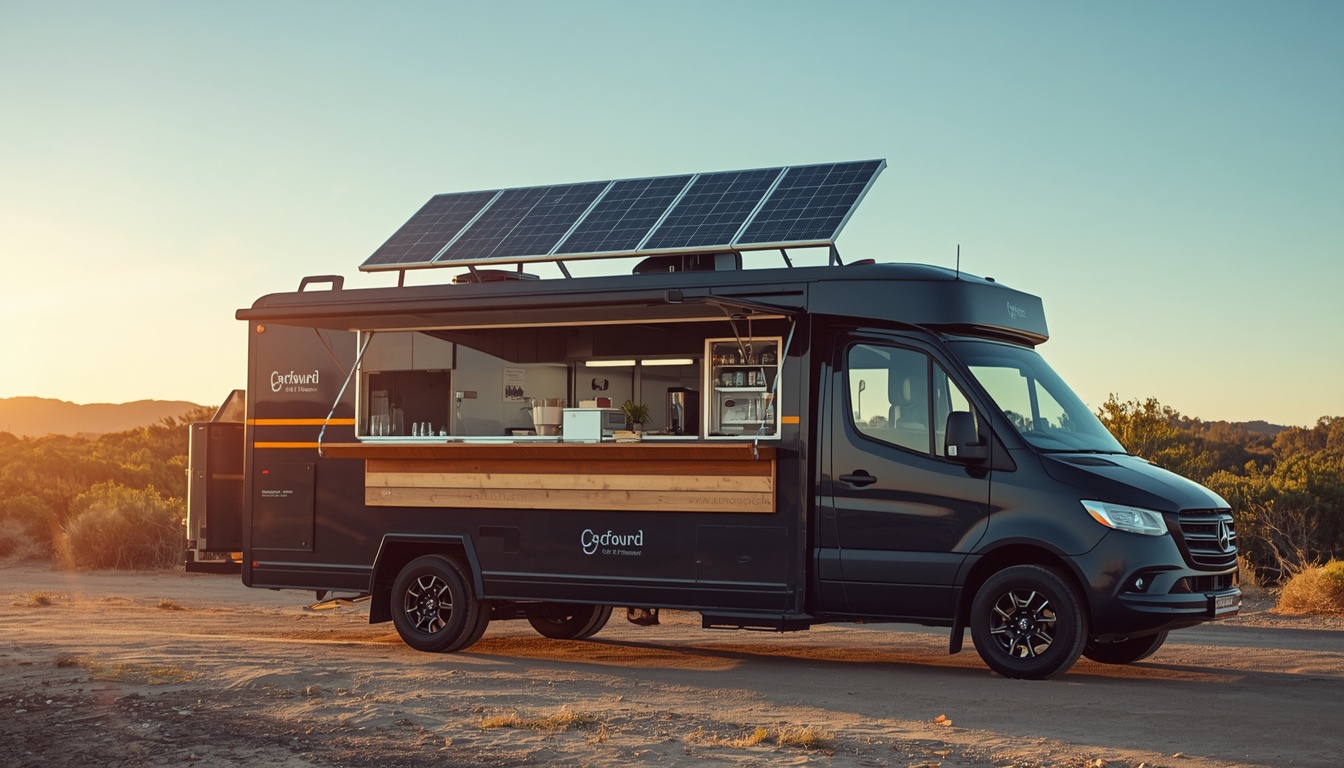
A food truck solar system stores energy rather than relying solely on instant sunshine.
The basic setup includes:
- Solar panels
- MPPT solar charge controller
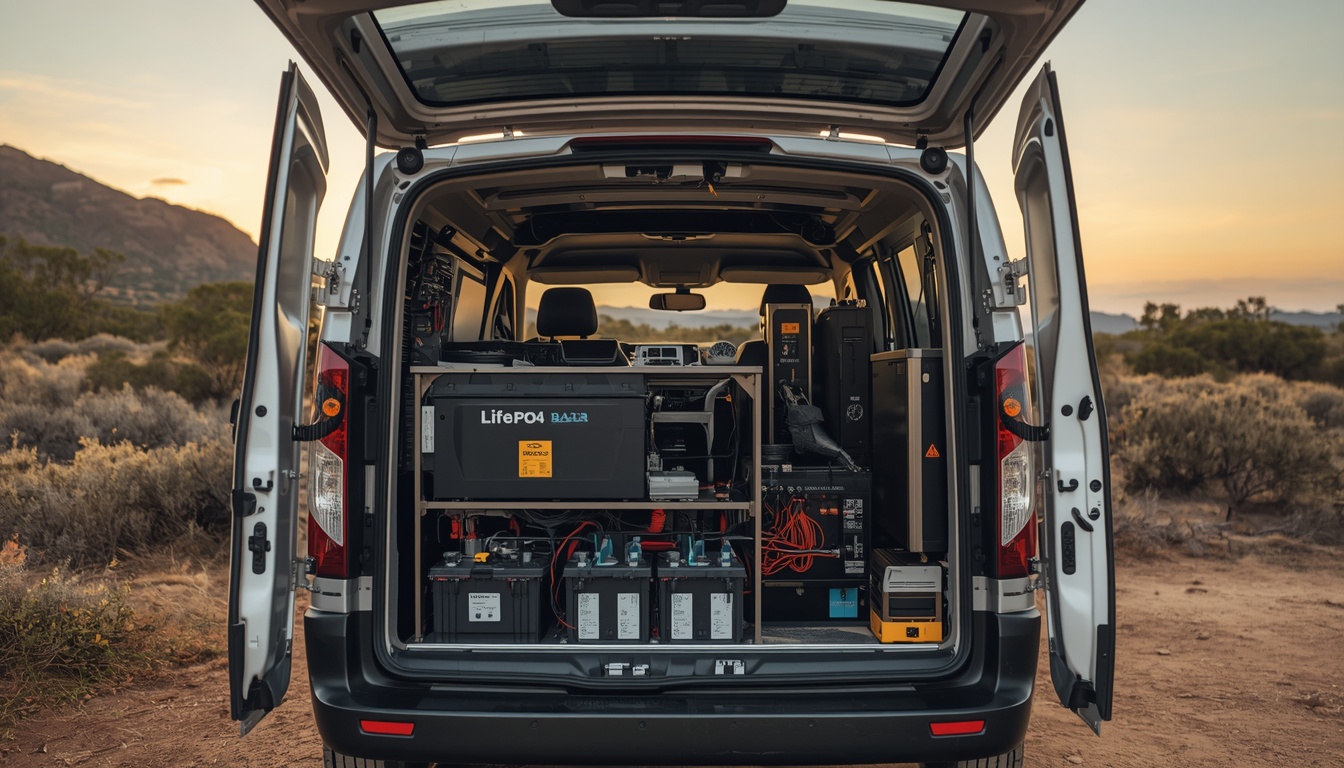
- LiFePO4 lithium battery bank (deep-cycle lithium battery storage)
- Pure sine wave inverter
- Battery monitoring and protection (BMS)
- Proper cabling and circuit protection
Here’s how it works:
- Solar panels generate DC electricity.
- The MPPT controller maximises energy harvest.
- The battery bank stores surplus energy.
- The inverter converts DC into AC power for kitchen appliances.
- The batteries continue supplying power when solar production drops.
Can Solar Panels Power Every Food Truck Appliance?
Not always. Food truck appliances have different power demands, and some require more energy than a practical solar system can provide.
|
Appliance |
Solar Friendly? |
|
LED lighting |
✓ Yes |
|
POS systems |
✓ Yes |
| Refrigerators |
✓ Yes |
|
Ventilation fans |
✓ Yes |
| Water pumps |
✓ Yes |
|
Coffee machines |
✓ Usually |
| Blenders |
✓ Usually |
|
Electric fryers |
✗ Often too power-hungry |
| Commercial ovens |
✗ Usually impractical |
| Large air conditioners |
◐ Depends on system size |
High-wattage cooking appliances require enormous amounts of energy. Many successful food trucks use solar power for refrigeration, lighting, electronics and auxiliary equipment while relying on LPG or other fuel sources for cooking.
How Much Solar Power Does a Food Truck Need?
The required solar capacity depends on your daily energy consumption, operating hours, appliance usage, battery capacity and available roof space.
1. 400-600W Solar System
Suitable for small setups using refrigeration, LED lighting, POS systems and basic electronics (around 2-3 kWh of daily energy use).
2. 800-1,200W Solar System
Suitable for medium food truck setups running multiple appliances such as refrigerators, fans, water pumps and additional electrical equipment (around 4-6 kWh of daily energy use).
3. 1.5-2.5kW Solar System
Suitable for larger food trucks with higher energy demands, longer operating hours and increased battery storage requirements (around 7-10 kWh of daily energy use).
Note: These estimates assume good solar conditions and an appropriately sized lithium battery system. Actual requirements vary depending on location, weather conditions, shading and available charging sources.
What Size Inverter Does a Food Truck Need?
The inverter size depends on the highest power appliances running at the same time. Food trucks with refrigeration, lighting and electronics may only require a 1,000W-2,000W inverter, while systems running coffee machines, induction cooktops or other high-load appliances may require 3,000W or more.
A pure sine wave inverter is recommended because it provides clean AC power suitable for sensitive electronics, refrigeration compressors and commercial equipment.

Why Lithium Batteries Are Essential
Solar production changes throughout the day, while food trucks often operate during mornings, evenings and events. Battery storage ensures reliable power when solar output is reduced.
LiFePO4 batteries are widely used in mobile and off-grid applications because they charge quickly, provide a higher usable capacity, maintain stable voltage under load, require very little maintenance, and weigh significantly less than comparable lead-acid batteries.
They can also deliver the high current required by inverters, making them suitable for mobile food businesses.
Choosing the Right Battery Capacity
As a general guide, smaller coffee trailers and basic food truck setups may use around 1-3kWh of lithium battery storage, medium food trucks may require 3-8kWh, while larger commercial setups may need significantly more capacity depending on appliance loads and operating hours.
Smaller systems may use 12V lithium batteries, while larger food truck systems often benefit from 24V or 48V battery configurations. Higher voltage systems reduce current flow, improve efficiency and allow larger inverter loads with smaller cable sizes.
Muller Energy offers LiFePO4 lithium battery options in 100Ah, 200Ah and 300Ah capacities to suit different mobile and off-grid power requirements. The correct battery capacity should always be calculated based on actual energy consumption rather than the size of the vehicle.

Is Roof Space a Limitation?
Yes. One of the biggest challenges when installing solar panels on a food truck is the limited roof space available. Roof vents, air conditioning units, signage, exhaust systems and skylights can all reduce the area available for solar panels, making system design more challenging.
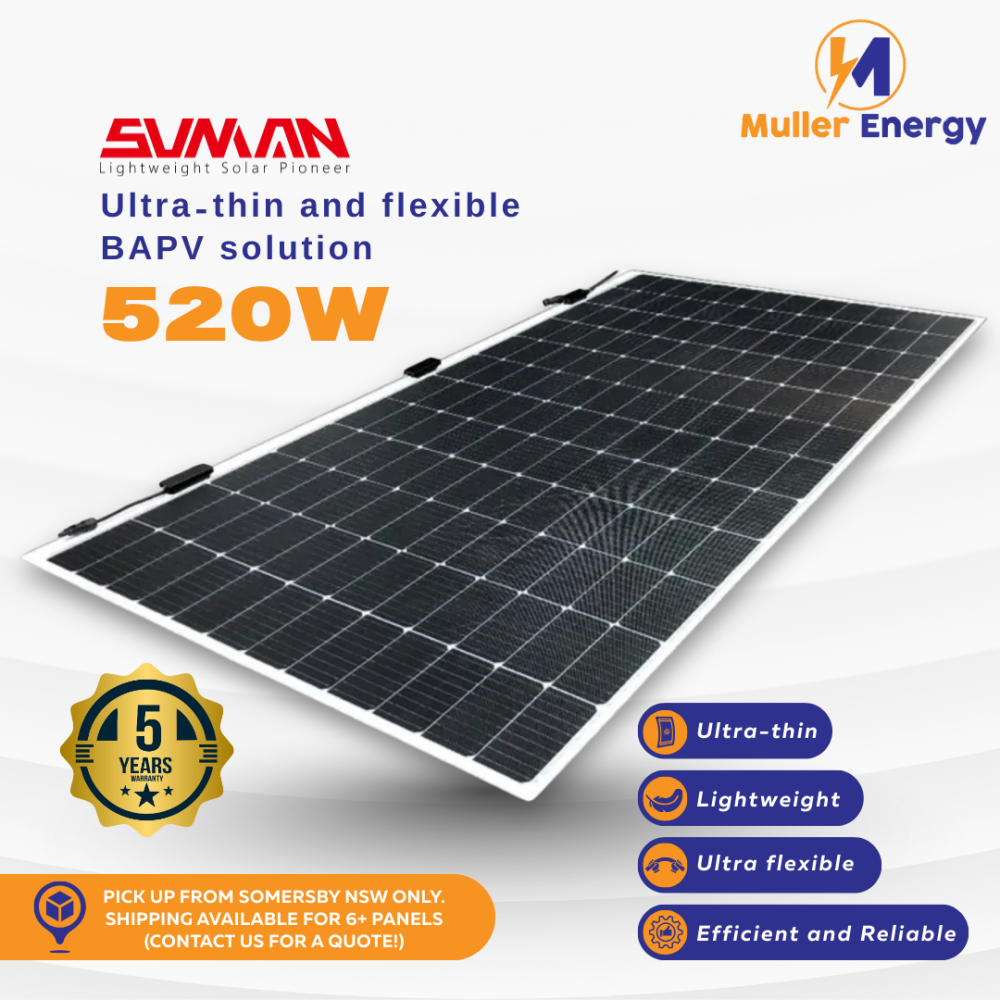
In these situations, lightweight flexible solar panels can be a practical solution, as they can often be installed on irregular or slightly curved roof sections where conventional rigid glass panels may not be suitable, helping to maximise the available space.
Fixed Panels vs Portable Solar Panels
|
Feature |
Flexible Solar Panels |
Portable Solar Panels / Solar Blankets |
| Best suited for | Permanent installation on food truck roofs, caravans and mobile setups | Temporary charging at markets, festivals or when extra solar capacity is needed |
| Installation | Mounted directly to suitable surfaces with proper support | No permanent installation required; set up when needed |
| Space efficiency | Makes use of curved or irregular roof areas where rigid panels may not fit | Requires separate storage space when not in use |
| Ideal use | Daily energy generation for fixed mobile businesses | Supplementary charging or increasing solar input during extended stops |
Many food truck operators choose flexible solar panels for their permanent roof installation because they maximise available space without adding significant weight. Portable solar blankets can complement this setup by providing additional charging capacity during events, markets or situations where the truck is parked in a shaded area.
Design the Entire System, Not Just the Solar Panels
Choosing solar panels is only one part of building a reliable food truck power system. Before purchasing components separately, calculate your total daily energy usage and design the battery bank, inverter, solar charging system and solar array as a complete package. This helps ensure every component is correctly matched for efficiency, safety and future expansion.
If you’re building or upgrading a food truck, Muller Energy offers LiFePO4 batteries, solar panels, inverters, chargers, BMS, cables and custom off-grid energy solutions to help businesses build reliable and efficient mobile power systems.
If you’re unsure which components are right for your setup, our team can help you select a complete system based on your equipment, operating hours, available roof space and expected energy consumption.