Most LiFePO4 batteries do not require manual balancing because the built-in Battery Management System (BMS) automatically balances individual cells during charging. Manual balancing is generally only required for DIY battery packs, replacement cells, or batteries with significant cell imbalance.
However, batteries that have been stored for long periods or systems showing uneven cell voltages may also require further investigation. Understanding when balancing is necessary and how to do it safely helps maximise battery performance, capacity and lifespan.
This guide explains how lithium battery balancing works, when it’s needed, and the safest methods for off-grid, caravan, campervan, marine and 4WD battery systems.

What Does It Mean to Balance a Lithium Battery?
Lithium battery balancing is the process of ensuring every cell within a battery pack remains at a similar voltage and state of charge. For example, a typical 12V LiFePO4 battery contains four cells connected in series.
Over time, small differences between these cells can develop due to normal manufacturing tolerances, variations in internal resistance, temperature changes, repeated charging and discharging cycles, or long-term storage.
If these differences become significant, one cell may reach full charge or become fully discharged before the others. This limits the usable capacity of the entire battery pack and may cause the Battery Management System (BMS) to reduce performance or disconnect the battery to protect the cells.
Why Is Battery Balancing Important?
Proper cell balancing helps maintain the overall health of a lithium battery pack.
Benefits include:
- Maximum usable battery capacity
- Longer battery lifespan
- Improved charging efficiency
- Better safety during charging
- Reduced stress on individual cells
- More accurate battery monitoring
In severe cases, heavily unbalanced cells can cause the BMS to disconnect the battery prematurely to protect individual cells from overcharging or over-discharging.
Do All Lithium Batteries Need Manual Balancing?
No. Most quality LiFePO4 batteries already include a Battery Management System (BMS) that continuously monitors the voltage of each individual cell and performs passive balancing when the battery reaches the conditions required by the BMS design, typically during the later stages of charging.
In most cases, manual balancing is only necessary when building a DIY battery pack, replacing individual cells, recovering a battery after long-term storage, or troubleshooting a battery with significant cell voltage differences or repeated BMS protection events caused by cell imbalance.
For sealed drop-in LiFePO4 batteries, manual balancing is rarely required as part of routine maintenance, provided the battery is used and charged correctly.
How Does a BMS Balance Lithium Batteries?
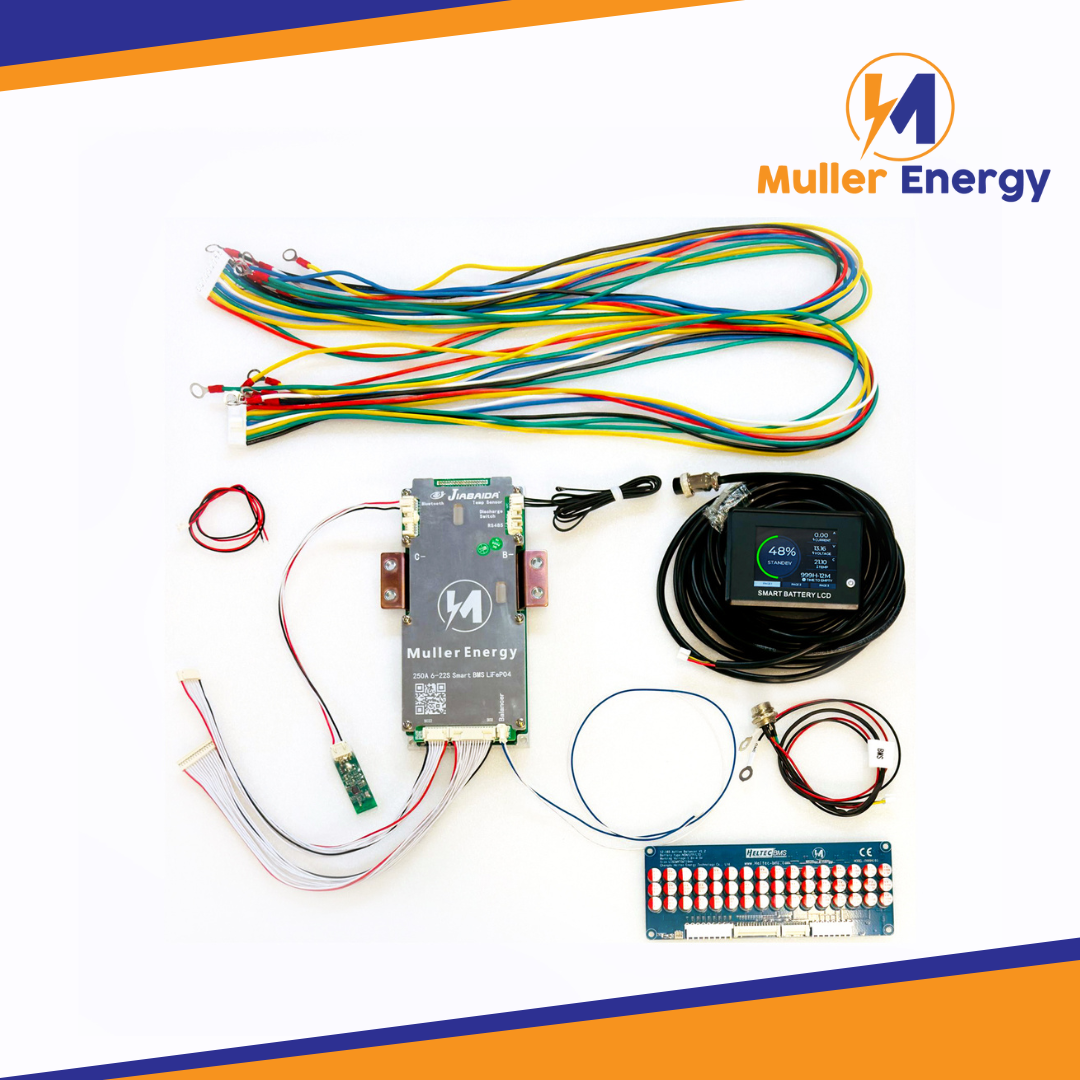
The Battery Management System monitors every cell individually. When one cell reaches a higher voltage than the others, the BMS reduces its charging rate by dissipating a small amount of energy through balancing resistors (known as passive balancing).
Some industrial battery systems use active balancing, which transfers energy from higher-voltage cells to lower-voltage cells, improving efficiency.
For most caravan, campervan and off-grid batteries, passive balancing is the standard approach and works effectively when the battery is regularly charged to full.
‘‘Want to understand the differences between these balancing methods? Read our guide on Passive vs Active BMS for LiFePO4 Batteries: What’s the Difference? to learn how each approach works and which is best suited to different battery applications.’’
How to Balance LiFePO4 Batteries Manually
If you’re working with individual LiFePO4 cells, manual balancing may be necessary before assembling a battery pack.
📌 Important Note: Manual balancing should only be performed on individual LiFePO4 cells before battery assembly or by experienced users. Never attempt to open or modify a sealed drop-in lithium battery.
Method 1: Top Balancing (Most Common)
Top balancing ensures all cells reach the same voltage when fully charged.
Typical process:
- Charge each individual LiFePO4 cell to the manufacturer’s recommended voltage.
- Once all cells reach the recommended voltage, connect them in parallel so their voltages can equalise naturally.
- Leave the cells connected until their voltages stabilise and become as close as possible.
- Assemble the battery pack by connecting the cells in series.
- Install the Battery Management System (BMS).
- Perform a complete charge cycle to verify the battery pack is operating correctly.
Top balancing is the preferred method for most off-grid energy storage systems.
Method 2: Bottom Balancing
Bottom balancing equalises cells at a low state of charge instead of a full charge. Although used in some specialised applications, it is less common for caravan and off-grid LiFePO4 systems because modern BMS units are designed around top balancing.
Signs Your Lithium Battery May Need Balancing
| Sign | What It May Indicate |
| Large voltage differences between cells | Cells have become unbalanced and may require investigation or balancing. |
| Reduced battery runtime | One or more cells may be limiting the battery’s usable capacity. |
| Battery reaches full charge unusually quickly | A high-voltage cell may be causing the BMS to stop charging early. |
| BMS disconnects during charging | One cell may be reaching its maximum voltage before the others. |
| Early low-voltage shutdown | A weaker cell may be reaching its minimum voltage before the rest of the pack. |
| Uneven cell voltage readings in a Bluetooth battery monitor | Persistent voltage differences between cells may indicate imbalance or a developing cell issue. |
If your battery is permanently sealed and includes an integrated BMS, these symptoms do not necessarily mean it requires manual balancing. They may also indicate a faulty cell, charger, wiring issue, or a problem with the BMS. Before attempting any maintenance, check the battery manufacturer’s recommendations or seek professional advice.
Tip: Before assuming your battery needs balancing, it’s worth checking its overall state of charge and individual cell voltages. Our guide on How to Measure the State of Charge of a Lithium Battery explains the most accurate methods.
Can You Balance a Sealed Lithium Battery?
Generally, no. Most sealed drop-in LiFePO4 batteries cannot be manually balanced because the individual cells are enclosed within the battery casing and are not designed to be accessed.
Instead, the recommended approach is to fully charge the battery using a compatible LiFePO4 charger and leave it at full charge for the period recommended by the manufacturer. This allows the integrated BMS to monitor and balance the cells automatically.
Keep in mind that repeatedly charging the battery only partially may prevent passive balancing from occurring, so an occasional full charge can help the BMS maintain balanced cell voltages.
Related Article: If you suspect the Battery Management System is malfunctioning, our guide on What Happens When a BMS Fails for a Lithium-Ion Battery? explains the common symptoms and what to do next.
Choose a Battery with an Integrated BMS
For caravan, campervan, marine and off-grid systems, the easiest way to avoid balancing issues is to start with a battery that includes a high-quality Battery Management System.
Muller Energy‘s LiFePO4 batteries are designed for Australian conditions and include an advanced BMS that helps maintain cell balance during normal charging. Combined with compatible lithium chargers, solar panels and inverters, this reduces maintenance while helping deliver reliable long-term performance.

Best Practices to Keep Lithium Batteries Balanced
Good charging habits help the BMS keep individual cells balanced over time.
- Use a charger with a LiFePO4 charging profile.
- Fully charge the battery occasionally, following the battery manufacturer’s recommendations, to allow the BMS to perform passive balancing where applicable.
- Avoid storing batteries completely discharged.
- Keep operating temperatures within the manufacturer’s recommendations.
- Use batteries with a quality BMS.
- Avoid mixing batteries of different ages, capacities or chemistries in the same battery bank.
- Never attempt to open a sealed drop-in LiFePO4 battery to manually balance the cells.
- Monitor battery health using Bluetooth monitoring or a battery monitor where available.
Final Thoughts
Balancing lithium batteries helps maintain maximum capacity, efficiency and battery lifespan by keeping individual cells at similar voltages. For most caravan, campervan and off-grid users, using a compatible charger, following good charging practices and choosing a battery with a quality BMS are the simplest ways to keep a LiFePO4 battery performing reliably for years.