If you’re installing a lithium system and wondering, “Do LiFePO4 batteries need ventilation in a campervan?”, the short answer is no under normal operation, but installation standards may still require venting or isolation.
This distinction matters. Technically, LiFePO4 batteries do not emit gases like AGM or lead-acid batteries. However, Australian installation standards for habitable vehicles introduce additional safety requirements that go beyond chemistry alone.
Let’s get to know what’s required, why it matters and how to install it correctly in a campervan.

Why Lead-Acid Batteries Require Ventilation & How is it Different from LiFePO4 Batteries
To know the difference, we must compare with lead-acid systems. Flooded and some AGM batteries release hydrogen and oxygen gases during charging, particularly during absorption and equalisation phases.
Hydrogen accumulation in a confined space creates a flammable and potentially explosive environment. For this reason, ventilation is mandatory when installing lead-acid batteries inside habitable areas.
LiFePO4 batteries operate differently:
- No electrolyte evaporation
- No hydrogen gas release
- No equalisation charging stage is required
- No off-gassing during normal charging and operation
From a chemistry perspective, this eliminates the need for ventilation during normal operation.
Do LiFePO4 Batteries Require Venting in Campervans?
The Technical Answer
Under normal operation, LiFePO4 batteries do not release hydrogen gas, do not off-gas during charging, and do not require airflow for chemical ventilation. Unlike traditional lead-acid batteries, they are sealed systems designed to operate safely without emitting gases during regular use.
The Compliance Answer
If the battery is installed inside a habitable area (where people sleep or live), installation must comply with AS/NZS 3001.2.
This standard requires that:
- Any potential gases from a battery failure must not enter the living space
- Batteries must be installed behind a sealed barrier or in a sealed compartment
- A vent path may be required to the exterior
This is a precautionary requirement, not because LiFePO4 batteries normally emit gas, but to address extremely rare failure scenarios.
Why Proper Lithium Installation Is Important?
Campervans are enclosed spaces, so safety requirements are stricter than in external installations. Although LiFePO4 failures are rare, standards are designed to protect occupants by preventing gas entry into the living area and reducing fire risk.
Meeting installation requirements also helps ensure insurance validity, warranty protection, and successful compliance inspections, especially important for DIY campervan builds.
How Does Ventilation Work in a Campervan Lithium Setup?
There are two widely accepted approaches used to ensure LiFePO4 batteries are installed safely and in line with compliance requirements:
1. Sealed Compartment with External Vent
In this approach, the battery is installed inside a sealed enclosure with a vent hose routed to the exterior of the vehicle, ensuring that any potential gases cannot enter the cabin. This setup prevents gas from accumulating in the living area and typically satisfies compliance requirements for most caravan and campervan installations.
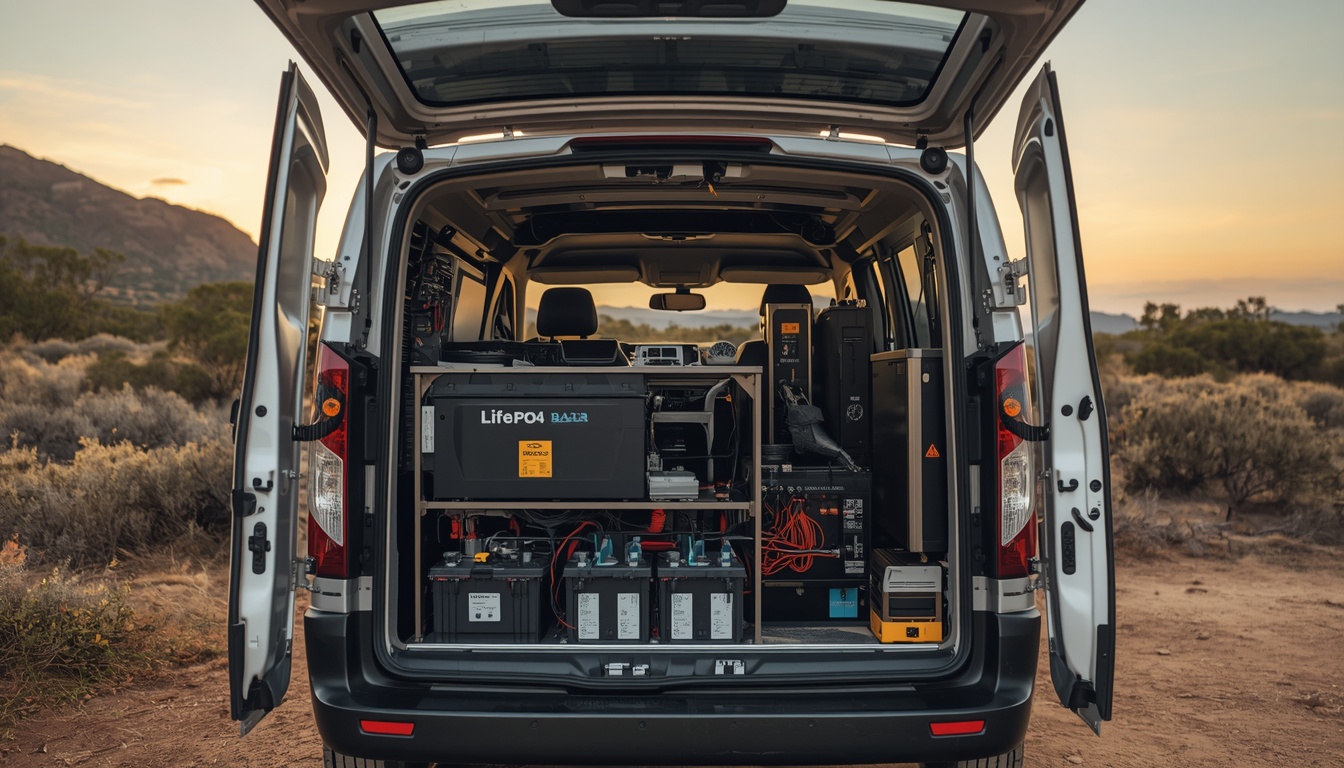
2. Installation Outside the Habitable Space
For example, the battery may be installed in an under-chassis battery box, a dedicated external battery locker, or an isolated rear compartment that is fully separated from the habitable area.
If gases cannot enter the living space, additional venting to the exterior may not be required, depending on the installation and applicable standards.

Who Needs to Worry About Ventilation?
| Installation Scenario | Ventilation / Isolation Consideration |
| Battery installed under the bed | Ventilation or sealed isolation is likely required |
| Inside a cabinet within the living area | Must prevent gases from entering the habitable space |
| Campervan conversion build | Compliance assessment required |
| Certifying a caravan installation | Must meet applicable electrical standards |
| Mounted in the engine bay (rare for lithium) | Depends on separation from the living area |
| Installed outside the vehicle | Venting is often not required |
| In a fully sealed external battery box | Additional venting may not be required |
Note: Requirements may differ depending on your installation setup and local regulations. Always confirm compliance with a licensed installer before finalising your battery installation.
Practical Installation Tips for LiFePO4 Batteries in a Campervan
If you’re installing LiFePO4 in a campervan:
- Confirm whether your setup falls under AS/NZS 3001.2
- Use a battery with integrated BMS protection
- Avoid placing the battery near heat sources
- Use appropriate cable sizing and terminals
- Ensure secure mounting to prevent movement
- Consider a compliance-ready battery system
If unsure, consult a licensed installer familiar with AS/NZS 3001.2.
Get Compliance-Ready LiFePO4 Batteries by Muller Energy
For Australian campervan owners who want to simplify compliance and install with ease, Muller Energy offers compliance-ready LiFePO4 batteries specifically designed for habitable installations. Designed for Australian conditions, Muller Energy batteries are built with:
- Internal sealed cell isolation
- Dedicated vent path design
- Compatibility with approved venting kits
- 10-year warranty
- Stainless steel casing for durability
When installed with an approved venting solution, these systems are designed to align with the intent of AS/NZS 3001.2 for habitable spaces. This approach reduces installation guesswork and simplifies certification for campervan and caravan builders.
Need Help With Compliance?
Don’t risk installation mistakes or failed inspections. Speak with our team for clear guidance on LiFePO4 battery placement, isolation requirements, and AS/NZS 3001.2 considerations.
📞 1300 654 320
✉️ [email protected]

When Is Ventilation Not Required?
Ventilation may not be required if the battery is installed outside the habitable area, placed in a fully sealed external battery box, or if local regulations do not require compliance with AS/NZS 3001.2. However, as a best practice, it is still recommended to isolate the battery from sleeping and living areas to maximise safety.