
Lithium batteries, especially LiFePO4 types, are known for being reliable, long-lasting, and stable. But like any electrical system, they can develop issues over time.
Recognising the common signs of a faulty lithium battery early can help you prevent system failures, safety risks and costly replacements.
Whether you’re running a 4WD setup, campervan, solar system, or off-grid power solution, understanding these warning signs helps you act before minor issues turn into major problems.
Why Identifying Faults Early Is Essential?
Ignoring battery issues can lead to sudden power loss in critical situations, potentially leaving you without reliable energy when you need it most. It can also damage connected devices such as inverters, chargers, and appliances, resulting in costly repairs or replacements.
Over time, unresolved faults reduce the overall lifespan of the battery, forcing earlier-than-expected replacement. More importantly, safety risks like overheating or unexpected system shutdowns can arise.
For off-grid users or travellers, a faulty battery can completely disrupt your entire power system, affecting both convenience and safety.

Signs of a Faulty Lithium Battery
1. Rapid Capacity Loss
If your battery drains much faster than usual, it’s a clear warning sign that something is not functioning correctly within the system and requires attention.
Example: A 100Ah battery that previously lasted 2 days under normal usage now lasts only a few hours, even when running the same appliances and under similar conditions.
Possible causes:
- Cell degradation
- Imbalance between cells
- Internal damage
Usage habits can also play a role. Frequently discharging the battery below 10–20% state of charge can accelerate degradation over time, leading to noticeable capacity loss even if the system appears to be functioning normally.
2. Voltage Drops Under Load
A healthy lithium battery maintains a stable voltage. If the voltage drops sharply when you run appliances, something is wrong.
What to watch for:
- Lights dim when devices turn on
- Inverter shutting down unexpectedly
This often indicates high internal resistance or weak cells.
3. Overheating During Charging or Discharging
Lithium batteries typically operate cooler than lead-acid systems under normal conditions, but temperature can rise under high loads, fast charging, or poor ventilation. Excessive heat often indicates an underlying issue, such as a faulty Battery Management System (BMS), overcharging, or even internal short circuits.
If ignored, this can reduce performance and create safety risks, making it important to identify and address the cause as early as possible.
Important: Persistent overheating can lead to serious safety risks.
4. Swelling or Physical Deformation
Any visible change in the battery’s shape is a serious warning sign that should never be ignored. Issues such as a bulging casing, a warped structure, or visible cracks and leaks typically indicate internal problems.
In most cases, this is caused by gas buildup or internal failure, and it requires immediate attention to prevent further damage or potential safety risks.
5. Inconsistent Charging Behaviour
If your battery charges unpredictably, it may be faulty and could indicate underlying issues with the cells or the battery management system.
Examples:
- Charging stops before reaching full capacity
- Battery jumps from low to high charge suddenly
- Charging takes much longer than usual
This often points to BMS issues or cell imbalance.
6. Battery Not Holding Charge
A fully charged battery that quickly drops to low levels, even when not in use, is a major warning sign of an underlying issue. This type of behaviour often points to internal issues such as cell degradation, internal resistance buildup, or parasitic drain within the system. If left unaddressed, it can significantly reduce performance and overall battery lifespan.
7. BMS Shutdowns or Error Messages
Modern lithium batteries are equipped with a Battery Management System (BMS) designed to protect the battery from unsafe operating conditions. If your system frequently shuts down or displays error messages, it is often a sign that the BMS is actively detecting a problem and preventing potential damage.
These shutdowns can be triggered by conditions such as over-voltage, under-voltage, excessive temperature, or short circuit detection, all of which indicate that the battery is operating outside its safe limits.
Not All Battery Issues Are Battery Faults
Before assuming your battery is faulty, it’s important to rule out external factors. Faulty chargers, incorrect voltage settings, or incompatible system components can create symptoms that look like battery failure.
For example, a charger with incorrect voltage limits may cause incomplete charging, while an undersized inverter or poor wiring can lead to voltage drops under load.
Always check your charging system, connections, and setup compatibility before concluding that the battery itself is the issue. This step is critical, as many apparent battery problems are actually caused by external system faults rather than the battery itself.

How Lithium Batteries Work (Quick Overview)
Lithium batteries store energy through chemical reactions between lithium ions and electrodes, allowing efficient charge and discharge cycles. A built-in Battery Management System (BMS) plays a critical role by ensuring balanced charging across cells, protecting the battery from unsafe conditions, and maintaining efficient energy output.
When any part of this system fails, both performance and safety can be compromised, leading to potential faults or system issues.
What to Do If You Notice These Signs
| Action | What to Do |
| Stop heavy usage | Avoid running high-load appliances to prevent further damage. |
| Check battery readings | Use Bluetooth monitoring or a voltmeter to review voltage, temperature, and charge level. |
| Inspect physically | Look for swelling, loose connections, or any visible damage. |
| Test with another system | Helps confirm whether the issue is with the battery or another component. |
| Consult a professional | Never attempt to open or repair lithium batteries yourself. |
Where a Reliable Battery Makes a Difference
If you’re dealing with recurring battery issues, the problem is often not just wear, but build quality. High-quality lithium batteries are designed to prevent most of these faults in the first place. For example, systems built with:
- Premium-grade LiFePO4 cells
- Advanced BMS protection
- Active cell balancing
- Durable casing and thermal management
…tend to deliver more stable voltage, longer lifespan, and safer operation.
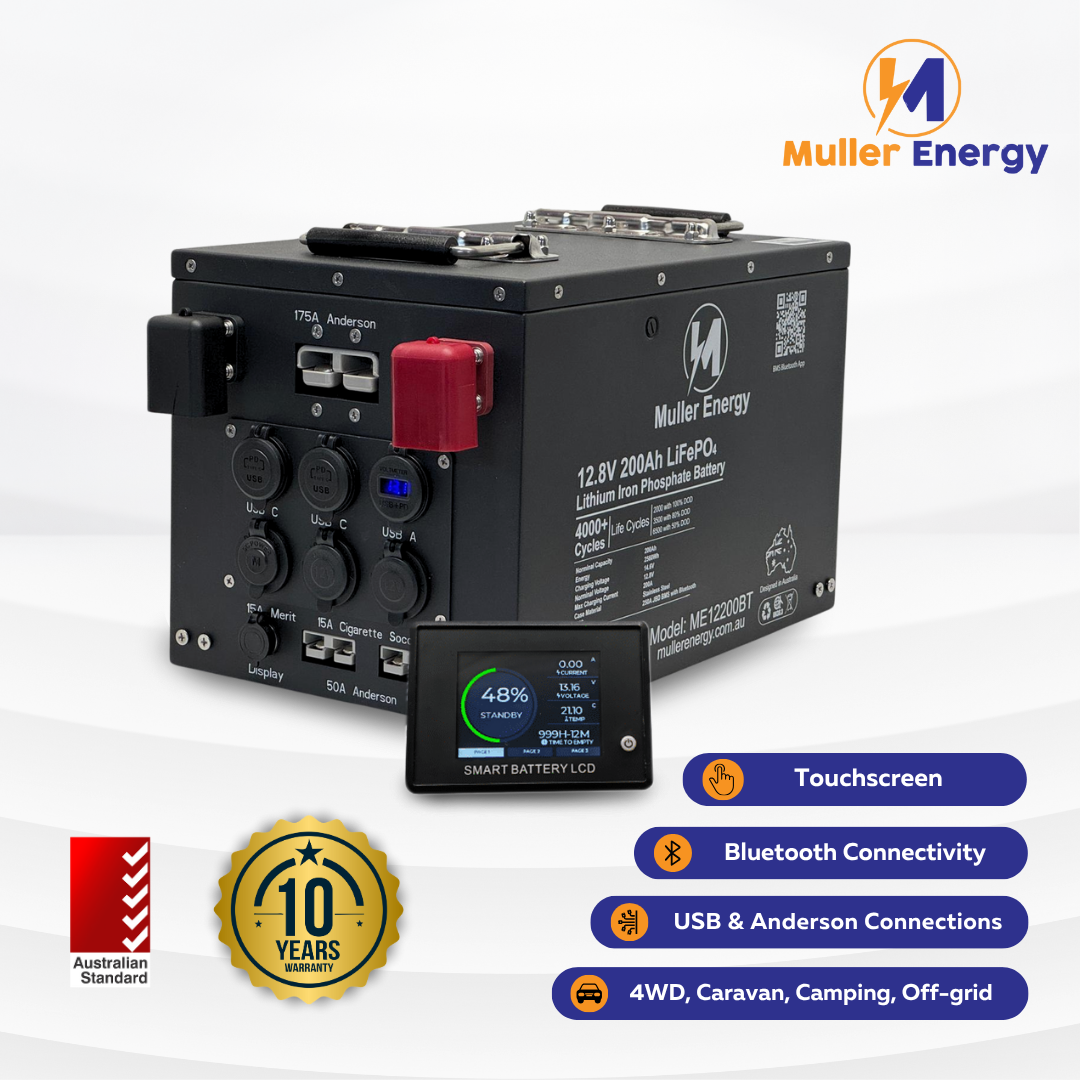
Tip: When upgrading or replacing your battery, look for options like those available at Muller Energy’s 4WD battery range. Our systems are engineered with premium EVE cells, active balancing technology, and robust safety features, which directly address many of the failure points listed above.
In addition, we offer a 10-year warranty and are backed by a strong 4.9-star customer rating, giving you added confidence in long-term reliability and support. This becomes especially important for off-road, camping, and off-grid applications where reliability isn’t optional.
When Should You Replace a Lithium Battery?
You should replace your battery if its capacity drops significantly and consistently, as this indicates it can no longer deliver reliable performance. Visible physical damage, such as swelling, cracks, or deformation, is another clear sign that replacement is necessary.
Ongoing BMS faults or repeated system shutdowns also suggest deeper internal issues that are unlikely to be resolved. Additionally, if the battery no longer supports your load requirements, it may be undersized or degraded. Delaying replacement in these situations can lead to further damage across your entire power system.
FAQs
1. How long should a lithium battery last?
Most LiFePO4 batteries last 8–15 years or 3000–5000 cycles, depending on usage, charging habits, and overall build quality.
2. Can a faulty lithium battery be repaired?
In most cases, lithium batteries are sealed systems and cannot be safely repaired. Some advanced or modular systems may allow limited servicing by professionals.
3. Is it safe to keep using a faulty lithium battery?
No. Continued use can lead to system damage, reduced performance, or serious safety hazards, especially if overheating, swelling, or repeated shutdowns are present.
4. How can I extend battery life?
To extend battery life, use compatible chargers, avoid frequent full discharges, regularly monitor battery health, maintain proper ventilation, and choose a high-quality system with reliable protection features.