Your energy system doesn’t deliver the backup time it once did.
Charging cycles feel shorter than expected.
Battery performance slowly drops—even without obvious misuse.
This isn’t a fault.
It’s lithium-ion battery degradation.
Lithium-ion batteries have become the backbone of modern off-grid and mobile energy solutions, powering solar storage systems, campervans, caravans, 4WD touring setups, and portable power stations with reliable, high-density energy. Despite their efficiency and energy density, lithium ion battery degradation is inevitable.
Performance loss does not happen randomly; it follows clear chemical, electrical, and environmental mechanisms. Understanding these mechanisms allows us to extend battery lifespan, maintain capacity, and delay costly replacements.
This comprehensive guide delivers a technical yet practical breakdown of what causes lithium ion battery degradation and provides proven lifespan optimisation strategies backed by real-world usage patterns.
Lithium Ion Battery Degradation: What You Need to Know
Lithium ion battery degradation is the gradual loss of capacity, power output, and efficiency that occurs over time, affecting how long and how reliably a battery can deliver energy. As this process advances, users typically notice shorter runtimes, requiring more frequent recharging, along with slower charging speeds as the battery becomes less efficient at accepting energy.
Degradation of lithium ion batteries also leads to voltage instability, where the battery struggles to maintain consistent output under normal loads, often causing performance drops. Internally, increased electrical resistance develops as battery materials wear, reducing power delivery and generating excess heat.
In more advanced stages, this can result in premature shutdown under load, even when some charge appears to remain. These effects are driven by two primary aging mechanisms: calendar aging, which occurs naturally over time regardless of use, and cycle aging, which results from repeated charging and discharging cycles, together determining the overall lifespan of a lithium ion battery.
Why Do Lithium ion Batteries Degrade?
Lithium ion battery degradation is influenced by a combination of chemical, electrical, thermal, and environmental factors that collectively determine how quickly capacity and performance decline. The most critical causes of degradation include the following:
1. Calendar Aging: Lithium Ion Battery Degradation Over Time
Calendar aging occurs even when a battery is not in use. It is driven by chemical reactions inside the cell that progress steadily with time.
- Electrolyte Decomposition: The liquid electrolyte slowly decomposes, especially at high states of charge. This decomposition consumes active lithium ions, permanently reducing capacity.
- Solid Electrolyte Interphase (SEI) Layer Growth: The SEI layer forms naturally on the anode surface. While necessary for battery stability, excessive SEI growth traps lithium ions and increases internal resistance.
- Storage Temperature Impact: Batteries stored at elevated temperatures degrade exponentially faster. Storage at above 30°C (86°F) significantly accelerates chemical aging.
2. Cycle Aging: Degradation Through Use
Cycle aging is caused by charging and discharging cycles. Each cycle physically and chemically stresses battery materials.
- Lithium Plating: Fast charging or low-temperature charging can cause metallic lithium to form on the anode, an irreversible process that accelerates lithium ion battery capacity degradation and increases safety risks.
- Electrode Structural Fatigue: Repeated expansion and contraction of electrodes cause micro-cracks, reducing electrical conductivity and active material availability.
- Depth of Discharge Stress: Deep discharges (0–100%) impose greater stress than shallow cycles. Batteries degrade faster when regularly discharged below 20% state of charge.
3. High Temperature: The Primary Degradation Accelerator
Temperature is the single most influential factor in lithium ion battery degradation.
- Heat-Driven Chemical Instability: Lithium ion battery high temperatures accelerate unwanted side reactions, including electrolyte oxidation and cathode breakdown.
- Thermal Runaway Risk: Extreme heat increases the risk of internal short circuits and catastrophic failure, particularly in poorly managed battery systems.
- Optimal Operating Range: Lithium ion batteries perform best between 15°C and 25°C (59°F–77°F).
4. Overcharging and High Voltage Stress
Maintaining a battery at 100% charge for extended periods significantly accelerates degradation.
- Cathode Oxidation: High voltage stresses the cathode material, causing structural instability and oxygen release in some chemistries.
- Increased SEI Growth: High voltage promotes continuous SEI thickening, consuming lithium inventory.
- Voltage Thresholds: Charging beyond 4.2V per cell dramatically shortens battery lifespan, even if safety systems prevent immediate failure.
5. Deep Discharging and Over-Discharge Damage
Allowing a lithium ion battery to drop too low causes irreversible damage.
- Copper Dissolution: Below safe voltage thresholds, copper current collectors dissolve into the electrolyte, permanently damaging the cell.
- Cell Imbalance: In multi-cell battery packs, deep discharge causes imbalance, increasing stress on weaker cells during recharge.
- Safe Minimum Voltage: Most lithium ion cells should not be discharged below 2.5–3.0V per cell.
“For a deeper explanation of how over-discharging causes permanent lithium-ion battery damage, see our guide on preventing over-discharge in camping and solar systems.”
6. Fast Charging and High C-Rates
While convenient, fast charging accelerates degradation.
- Ion Diffusion Limitations: High charging currents exceed the rate at which lithium ions can intercalate into the anode, leading to lithium plating.
- Thermal Stress: Fast charging generates excess heat, compounding chemical degradation mechanisms.
- Balanced Charging Strategy: Moderate charging rates dramatically improve long-term capacity retention.
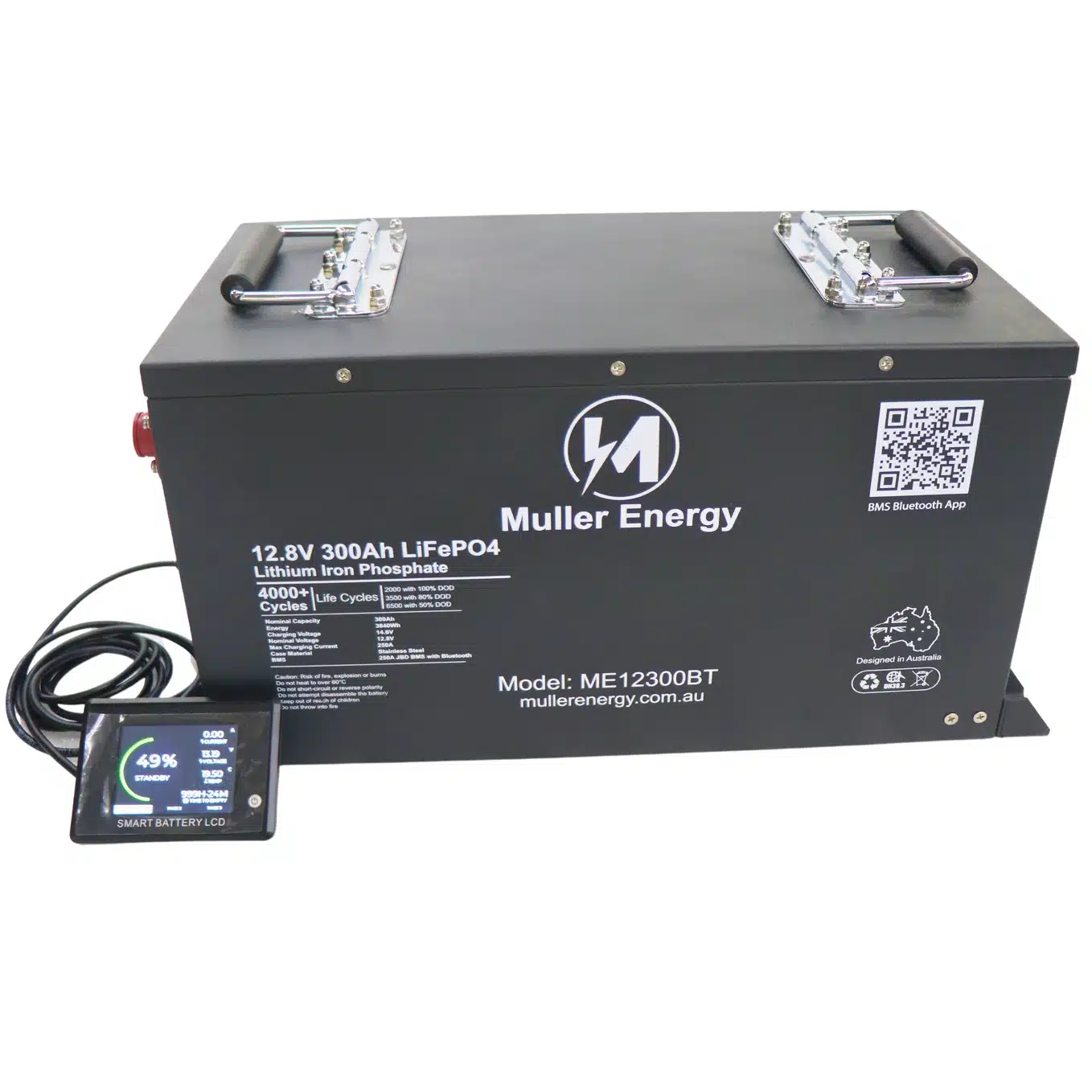
Tip: Using high-quality accessories such as Muller Energy’s chargers, MPPT controllers, inverters, and BMS units can reduce the risk of lithium ion battery degradation caused by poor charging or voltage management.

7. Poor Battery Management System (BMS) Control
A battery management system plays a critical role in longevity.
- Voltage Imbalance: Without proper balancing, individual cells experience uneven stress, accelerating pack-level degradation.
- Thermal Mismanagement: Inadequate temperature monitoring allows heat buildup that damages cells.
- Protection Circuit Failures: Over-voltage, under-voltage, and over-current protection must function precisely to prevent degradation.
8. Material Quality and Cell Chemistry
Not every lithium-ion battery experiences degradation at the same speed.
Cathode Chemistry Variations
- NMC (Nickel Manganese Cobalt): High energy density, moderate lifespan
- LFP (Lithium Iron Phosphate): Lower energy density, exceptional cycle life
- NCA (Nickel Cobalt Aluminium): High performance, sensitive to heat
- Manufacturing Tolerances: Impurities, inconsistent electrode coatings, and poor sealing significantly reduce battery longevity.
9. Environmental and Mechanical Stress
External stress factors accelerate degradation beyond chemical aging.
- Vibration and Shock: Frequent vibration damages internal connections, especially in mobile and automotive applications.
- Humidity Exposure: Moisture intrusion causes electrolyte contamination and corrosion.
- Physical Deformation: Swelling, punctures, or compression permanently compromise internal cell integrity.
Related Articles:
Why Does a Lithium-ion Battery Explode?
How to Store Lithium Batteries to Expand Life
How to Increase the Life of Your Lithium Battery and Should You Bother?
How to Extend the Life of Lithium Ion Batteries
Implementing disciplined usage habits dramatically slows degradation by reducing chemical stress, minimising heat buildup, and preserving long-term battery efficiency.
1. Maintain Optimal Charge Levels
We achieve longer battery life by operating lithium ion batteries within the 20% to 80% charge range, as this minimises voltage stress on the electrodes. Avoiding prolonged storage at 100% charge reduces cathode oxidation and slows chemical aging.
2. Control Temperature Exposure
We protect battery health by storing and operating batteries in cool, dry environments. Charging in direct sunlight or enclosed hot spaces should be avoided, as elevated temperatures significantly accelerate internal degradation reactions.
3. Use Moderate Charging Speeds
We extend battery longevity by preferring standard charging speeds instead of fast charging whenever possible. Allowing the battery to cool before recharging prevents heat buildup and reduces the risk of lithium plating.
4. Avoid Deep Discharges
We reduce long-term damage by recharging batteries before the charge level drops below 20%. Using low-voltage cutoff protection prevents over-discharge, which can cause irreversible internal cell damage.
5. Store Batteries Correctly
For long-term storage, we maintain batteries at 40%–60% charge, a range that minimises chemical stress. Performing a periodic recharge every 3–6 months helps prevent deep discharge and preserves battery stability.
Tip: When selecting lithium-ion batteries, choosing a trusted supplier like Muller Energy, with a 10-year warranty on batteries and a 4.9 Google rating, ensures long-term reliability and peace of mind.

Expected Lithium Ion Battery Lifespan
Battery lifespan is measured in charge cycles and years, not just time, as both usage frequency and natural aging contribute to gradual performance loss.
Application Type |
Typical Cycle Life Range |
Expected Battery Longevity |
| Consumer Electronics | 500–800 cycles | Designed for daily use with a moderate lifespan under standard charging habits |
| Electric Vehicles (EVs) | 1,500–3,000 cycles | Optimised for long-term performance with advanced thermal and battery management systems |
| LFP Energy Storage Systems | 3,000–6,000 cycles | Engineered for extended service life and high cycle durability in stationary applications |
Proper management can double the effective service life before capacity drops below 80%.
Final Insights on Lithium Ion Battery Degradation
Lithium ion battery degradation follows predictable patterns governed by temperature, voltage, charge rate, depth of discharge, and material quality. While degradation cannot be eliminated, it can be significantly slowed through informed usage, intelligent charging habits, and proper storage.
By controlling the variables within our influence, we preserve battery capacity, performance reliability, and long-term value, ensuring lithium ion technology delivers its full potential over years of dependable service.